
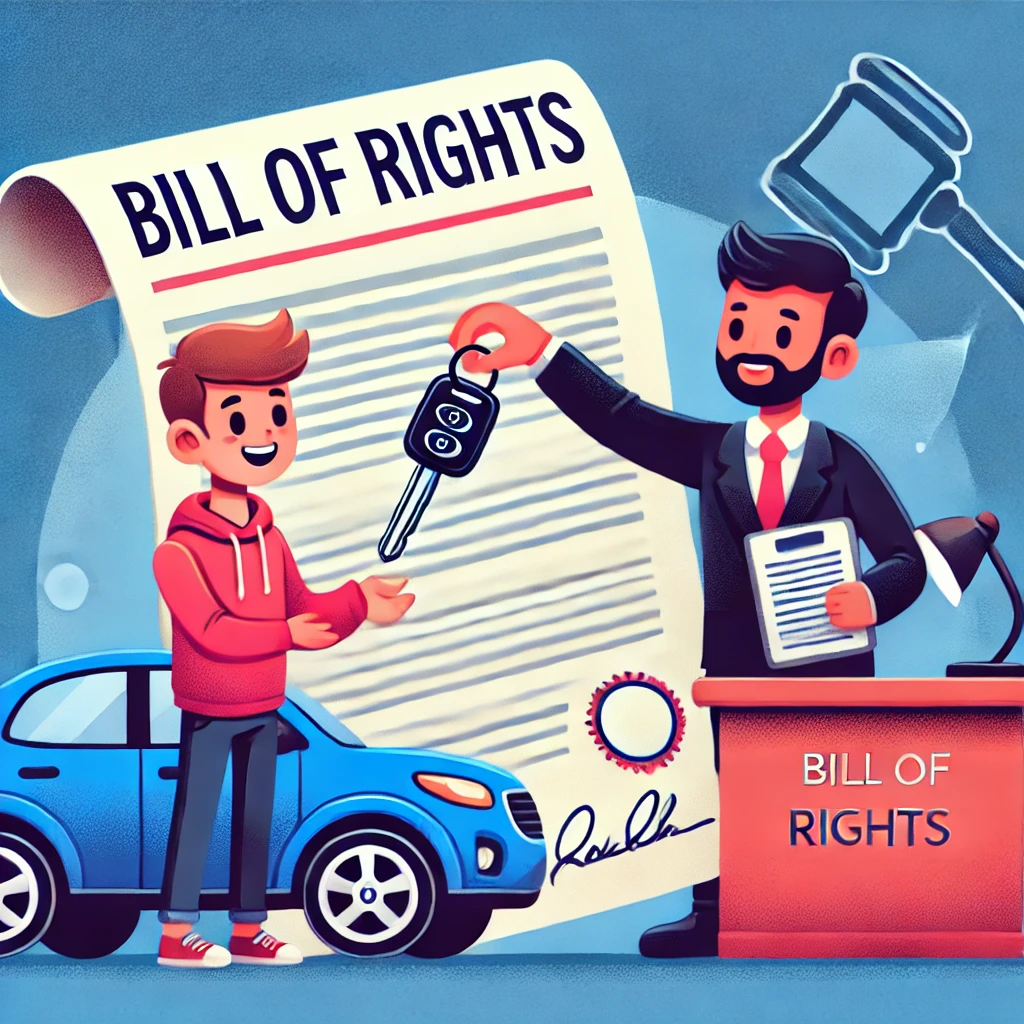

Buying a car can be a daunting experience, but in California, the Car Buyer’s Bill of Rights offers significant protections to ensure transparency and fairness. This legislation, applicable to retail vehicle sales, mandates specific disclosures and practices to safeguard consumers. Here’s a detailed overview to help potential clients understand their rights when purchasing a vehicle.
Key Provisions of the Car Buyer’s Bill of Rights
1. Consumer Credit Score Disclosure

Dealers must provide a “Notice to Vehicle Credit Applicant” document, which includes:
- Each credit score obtained and used by the dealer.
- Information on the consumer’s credit history and how credit scores affect loan availability and cost.
- A graph or statement comparing the consumer’s score with other consumers.
- Details about obtaining free annual credit reports.
Hypothetical Example: Jane, in Fresno, is buying a car and is presented with her credit scores by the dealer, who explains how her score impacts the loan’s interest rate. This transparency allows Jane to make an informed decision.
2. Auto Financing Fee Caps

If a dealer arranges financing, their compensation is capped at:
- 2% of the purchase amount for contracts over 60 months.
- 2.5% for contracts 60 months or less.
Hypothetical Example: John, in Sacramento, finances through the dealer for a 72-month term, and ensures the dealer’s fee does not exceed 2% of the loan amount, preventing excessive charges.
3. Purchase Price Disclosure for Included Items

Dealers must provide a written breakdown of the costs of items like service contracts and insurance, and their impact on monthly payments.
Hypothetical Example: Sarah, from Pasadena, buys a car with a service contract. The dealer shows how this addition affects her monthly payment, allowing her to decide if it’s worth the extra cost.
4. Prohibited “Certified” Used Vehicles
Used vehicles cannot be advertised as “certified” if they:
- Have inaccurate odometer readings.
- Were reacquired under lemon laws.
- Have significant damage or title branding (e.g., salvage, junk).
- Lack a complete inspection report.
Hypothetical Example: Mark, in Santa Barbara, finds a “certified” used car, but the dealer discloses it was previously damaged in a flood and repaired. Mark decides against purchasing, avoiding potential future issues.
5. Two-Day Contract Cancellation Option for Used Cars
Consumers must be offered a two-day contract cancellation option for used cars priced under $40,000. The cost varies based on the car’s price.
Hypothetical Example: Lisa, in San Jose, buys a used car and opts for the cancellation agreement. After a day, she finds a better deal and returns the car, paying a small restocking fee, avoiding a hasty and costly purchase.
Additional Consumer Protections
6. Record of Complaint Form
If a dealer violates the Car Buyer’s Bill of Rights, consumers can file a complaint with the DMV.
7. Verifying a Dealer’s License
Consumers can check the status of a dealer’s license through the DMV’s Occupational Licensing Status Information System.
8. Civil Disputes
For unresolved issues, consumers may seek help from private attorneys, small claims court, or legal aid groups.
9. Consumer Alternatives
Consumers can also contact the Better Business Bureau, the California Attorney General, the Bureau of Automotive Repair, or the Arbitration Certification Program for assistance with disputes.
How Sierra Litigation Can Help
At Sierra Litigation, we are committed to representing victims of auto fraud across California. Whether you’re in Los Angeles, San Francisco, San Diego, Sacramento, Riverside, Anaheim, Long Beach, Santa Clara, Fresno, Bakersfield, or anywhere else, we provide no-fee legal representation to ensure your rights are protected. Our expertise in handling cases involving violations of the Car Buyer’s Bill of Rights ensures that you receive the justice you deserve.
If you’ve experienced any violations during your car purchase, our team is here to assist you. We help clients file complaints with the DMV, verify dealer licenses, and navigate civil disputes. Our goal is to make sure you are treated fairly and transparently in all vehicle transactions.
Conclusion
The Car Buyer’s Bill of Rights provides vital protections for car buyers in California, ensuring transparency, fairness, and accountability in vehicle sales. By understanding these rights, consumers can make more informed decisions, avoid potential pitfalls, and ensure a smoother car-buying experience. For any legal assistance or to address potential violations, contacting Sierra Litigation can provide the support needed to navigate these issues effectively.